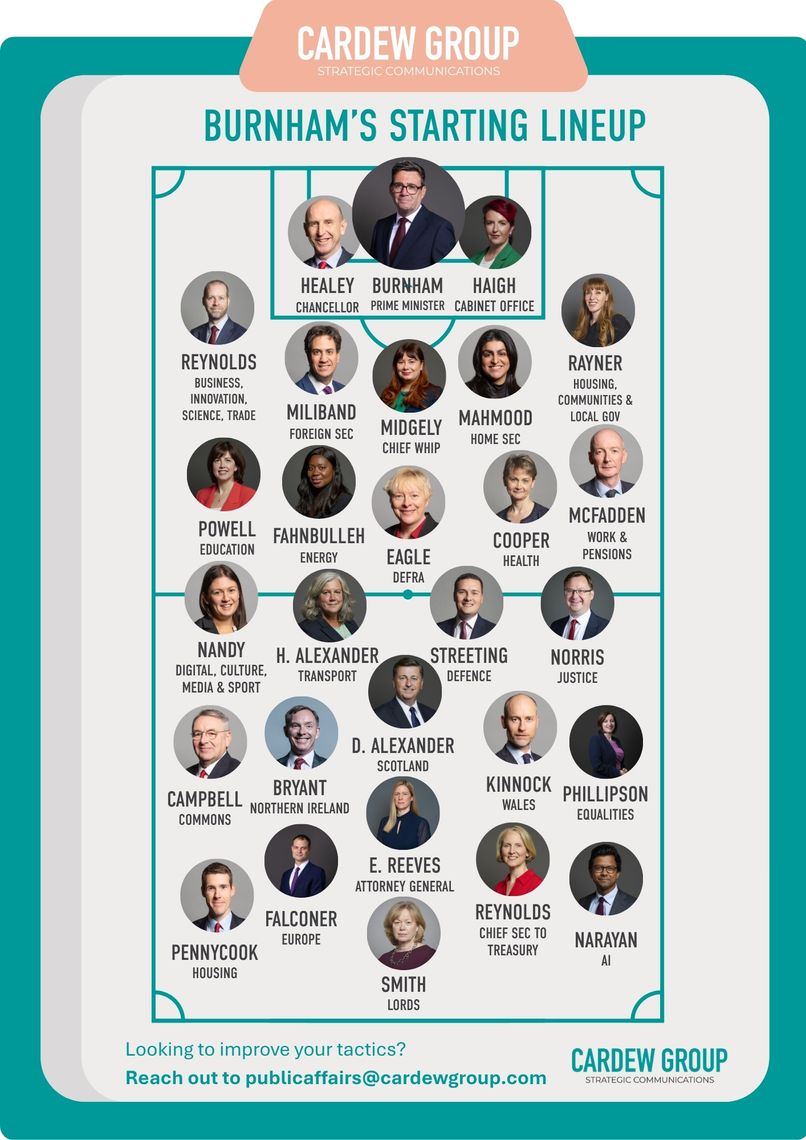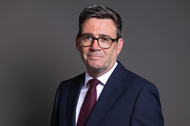
Andy Burnham has appointed his cabinet
By the Public Affairs team
In the end it was brutal but great political theatre. Fresh from meeting the King; speaking to supporters in Downing Street; calls with Presidents from Trump to Zelensky, Macron to Merz; and spooking the bond markets; new Prime Minister Andy Burnham then cut a swathe through Keir Starmer's Cabinet.
David Lammy, Darren Jones, Steve Reed, Peter Kyle, Liz Kendall, Hilary Benn, Richard Hermer, and the biggest scalp of all: Rachel Reeves. Showing our new Prime Minister has a sense of humour, she was reportedly offered Defence but turned it down. Demotions too for Yvette Cooper (to Health) and Bridget Phillipson (losing Education but keeping Equalities) and Dan Jarvis (from Defence).
Just after 6 came the shock of the day. Chancellor John Healey - the man who resigned over the Treasury's refusal to provide enough money for defence. Popular across the party, and with Treasury experience from the Blair years, it means defence spending (and bonds?) will be prioritised, while Ed Miliband takes the consolation prize of Foreign Secretary, even if geopolitics could scarcely be less friendly right now. But Healey’s safe pair of hands also suggests a power tilt from the Treasury to a beefed-up No10 (and No10 North) and to new First Secretary of State, Lou Haigh, Deputy Prime Minister in all but name.
Lou is joined by other Burnhamites: Angela Rayner gets her old job back at Housing & Communities, Johnny Reynolds gets his at Business and with Science and Innovation added, Lucy Powell gets Education, Miatta Fahnbulleh gets DESNZ and Anneliese Midgley is Chief Whip.
Keeping Shabana Mahmood and her controversial reforms at the Home Office is a smart move politically, but Wes Streeting to Defence will have surprised both him and the armed forces.
Within the Labour Party there will be renewed hope of stopping Reform and holding off the Conservatives and Greens. Burnham's cheery candour does already feel like a breath of fresh air after the Starmer years, but within business there will be a sense of foreboding. The implied promises of more money for defence, social care, housebuilding, cost of living measures (like this morning's VAT cut) and what the new PM called yesterday the 'Preventative State' puts eye-watering pressure on the public finances. The commitments to stick to Rachel Reeves’ fiscal rules and the 2024 election manifesto gives the new Government very little room for manoeuvre. Though sticking with Pat McFadden at Work & Pensions suggests the PM knows part of the answer is welfare reform.
This is Burham’s moment of greatest political power and he has built a phalanx of supporters around him in Cabinet. But the Labour Party may now have a taste for regicide and yesterday he will have made lots of new enemies. He will need all his undoubted communication skills, and personal charm for the formidable task ahead.
If you would like to know what this means for your organisation, our public affairs team is here to help: publicaffairs@cardewgroup.com