A new dawn for UK mining?
By Robin Walker, Director
Critical minerals from British soil. Not a new concept, but in a more fractured and dangerous world it is becoming a more urgent one.
The UK started the industrial revolution with coal, iron, tin and other metals mined from the earth of Scotland, Wales, Cornwall and the Midlands. The salt mines of Cheshire created one of the world’s first complex chemical industries and from aluminium to stainless steel, UK engineers pioneered technologies that gave us modern materials.
Today many people might think that mining is finished as a UK industry, but a conference in Cornwall bringing together the engineers, equipment manufacturers, geologists, financiers and Government suggests otherwise.
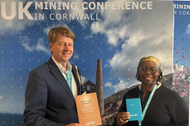
Cardew Group was proud to be sponsor for the Investor Congress at The UK Mining conference in Cornwall this year which heard from a number of substantial mining projects advancing or nearing completion, projects which will bring jobs, opportunities and access to new critical minerals close to home.
Cornish Lithium, whose founder launched the conference eight years ago, have completed a demonstration plant, secured critical national infrastructure status at their hard rock lithium mine and are also drilling for Lithium in brines, which can be extracted with geothermal heat from Cornwall’s hard rock. Their main project promises to secure a fifth of the Lithium targeted in the UK’s Critical Minerals Strategy, enabling domestic development of EV batteries and the growing battery for energy storage industry. Nearby Cornish Metals has seen a strong revival in its share price since re-listing from Toronto to London and is advancing its plan to reopen the South Crofty tin mine, the last of Cornwall’s historic tin mines to close in 1998. Tin, which fell into disfavour for cans, has seen its price surge thanks to demand for solder used in phone circuits and datacentres as well as declining stockpiles. The price was around $5000 per tonne when the mine closed and is now around $50,000.
Over the border in Devon Tungsten West is just two years away from entering production of Tungsten, a metal whose price has been sent through the roof by Chinese export controls and is increasingly sought after for defence. Their shares on the London Stock exchange have more than doubled so far this year. This year’s conference heard from miners made more confident by rising prices and real progress on the ground.
Deep underground in the Yorkshire meanwhile, one of the most ambitious and spectacular mines to be conceived in Europe, Anglo American’s mighty Woodsmith mine is edging towards completion, a 37 km tunnel at 1600 metres below the surface will make this one of the largest and most invisible mines ever constructed – hidden deep beneath the moors - and its output, a high grade fertiliser, could transform UK food security and make a significant contribution to exports.
For the explorers there is the knowledge that prices will keep changing and that geology plays tricks on those who base assumptions on it. Britain being a crowded island means that the scope for exploration is limited to those areas that are more remote or that have supportive landowners. Nevertheless, drilling is progressing across much of inland Cornwall in the search for tin and lithium, in the Northern parts of Scotland for gold, tungsten, nickel and copper and in County Durham for Lithium. Getting their finds turned into projects will require strong public support, good communication and, most critically, finance.
Cardew Group was proud to sponsor the Investor Congress at this year’s conference and to bring together the companies with investors who can help them to progress.
We talked about the vital importance of communicating effectively and of demonstrating ESG to win and sustain the licence to operate. We set out how Cardew Group’s combination of deep sector expertise and an integrated offer across digital, public affairs and media can help companies get their stories in front of the right audience in the right way. If you want to discuss strategic communications in the mining sector contact Robin Walker or Tanya Chikanza.
We heard a range of stories from companies large and small, but the unifying factor was the UK can and must make a contribution to the critical minerals race. The increased confidence at this year’s UK Mining Conference suggests that this is beginning to happen in earnest.